
"TRON: Ares" Feels Like a Shell Without a Ghost
Disney debugs all the weirdness from the TRON series and loses what made it stand out in the first place

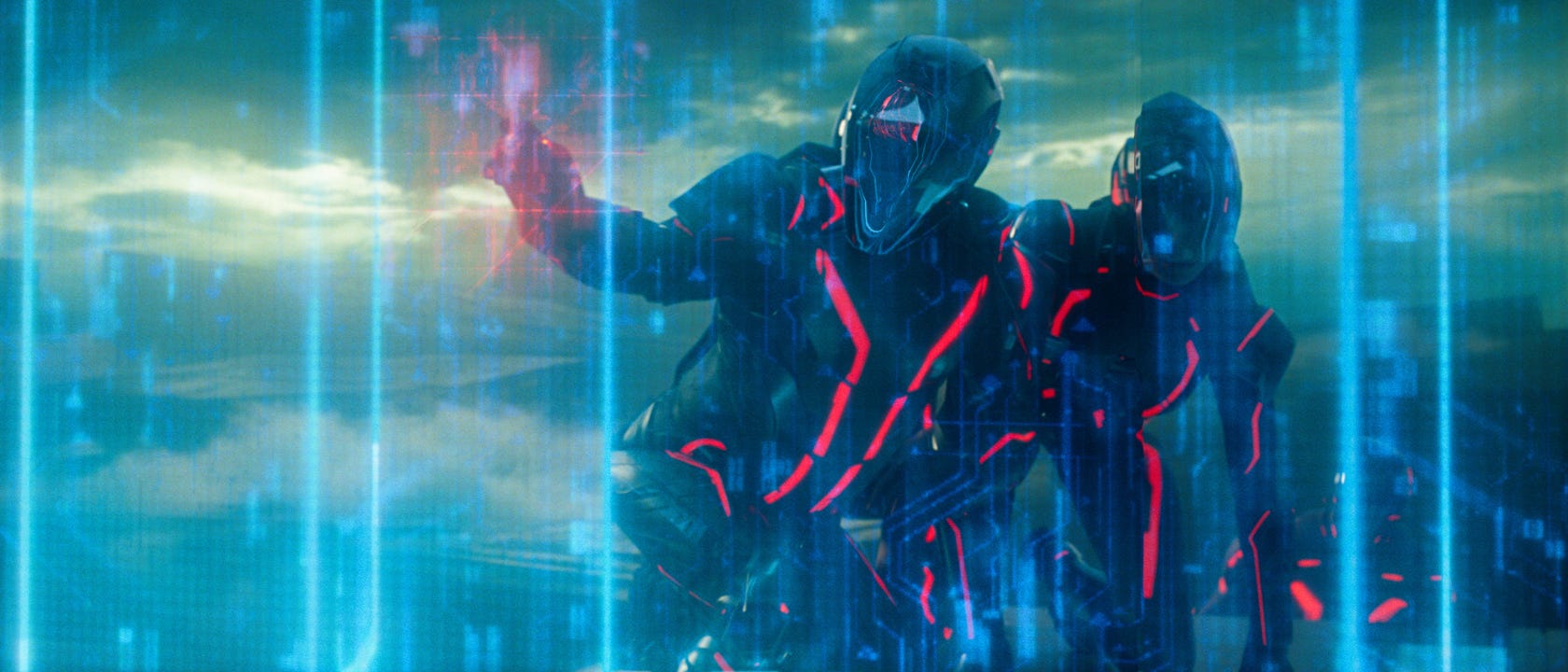
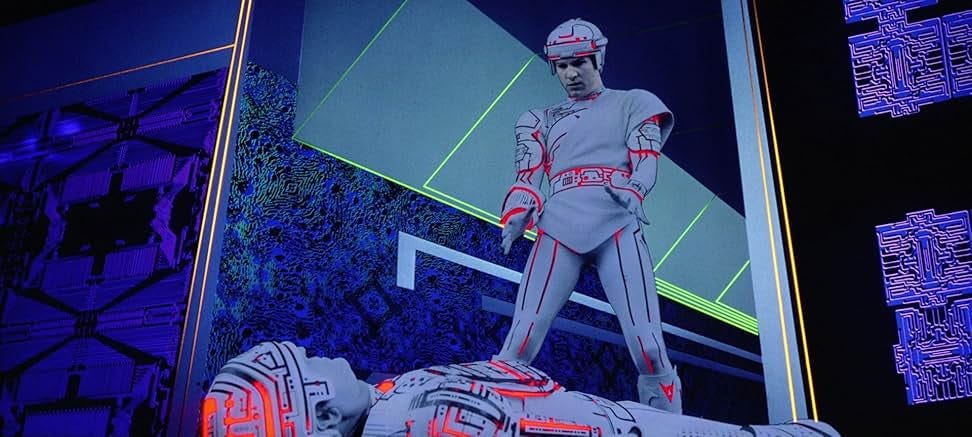
The biggest mistake Disney has made with TRON: Ares is trying to make it a normal movie. It was a hard sell to a mainstream audience in 1982, with a premise that asks the question: What if you could travel to a world inside of your computer where programs were people and drove cool neon-lit motorcycles? The answer is The Chronicles of Narnia for gamers, just replace the magic wardrobe with a magic laser. The 2010 Legacy sequel didn’t fare much better, but that weirdness is also the reason the series became a cult favorite. As a result, TRON has always been the runt of the Disney IP litter.
And I love it. I love the fusion of religious mysticism and computer science, and killer soundtracks from legends Wendy Carlos and Daft Punk. I love the of-their-time computer-generated visuals, beyond archaic by today’s standards, but in context have aged like low-poly wine. Above all, I love and admire the sincere commitment to its own ludicrous lore. Even when TRON doesn’t work, there’s nothing else quite like it.
By contrast, TRON: Ares looks and feels like the typical Walt Disney Studios Live Action Tentpole™. The same formula we’ve seen them recycle time and time again, from Marvel movies to live action remakes of their animated classics. It’s a sad sight. One made even sadder that beneath the corporate mandates, you can see the hints of interesting ideas and stories trying to break through the studio red tape.
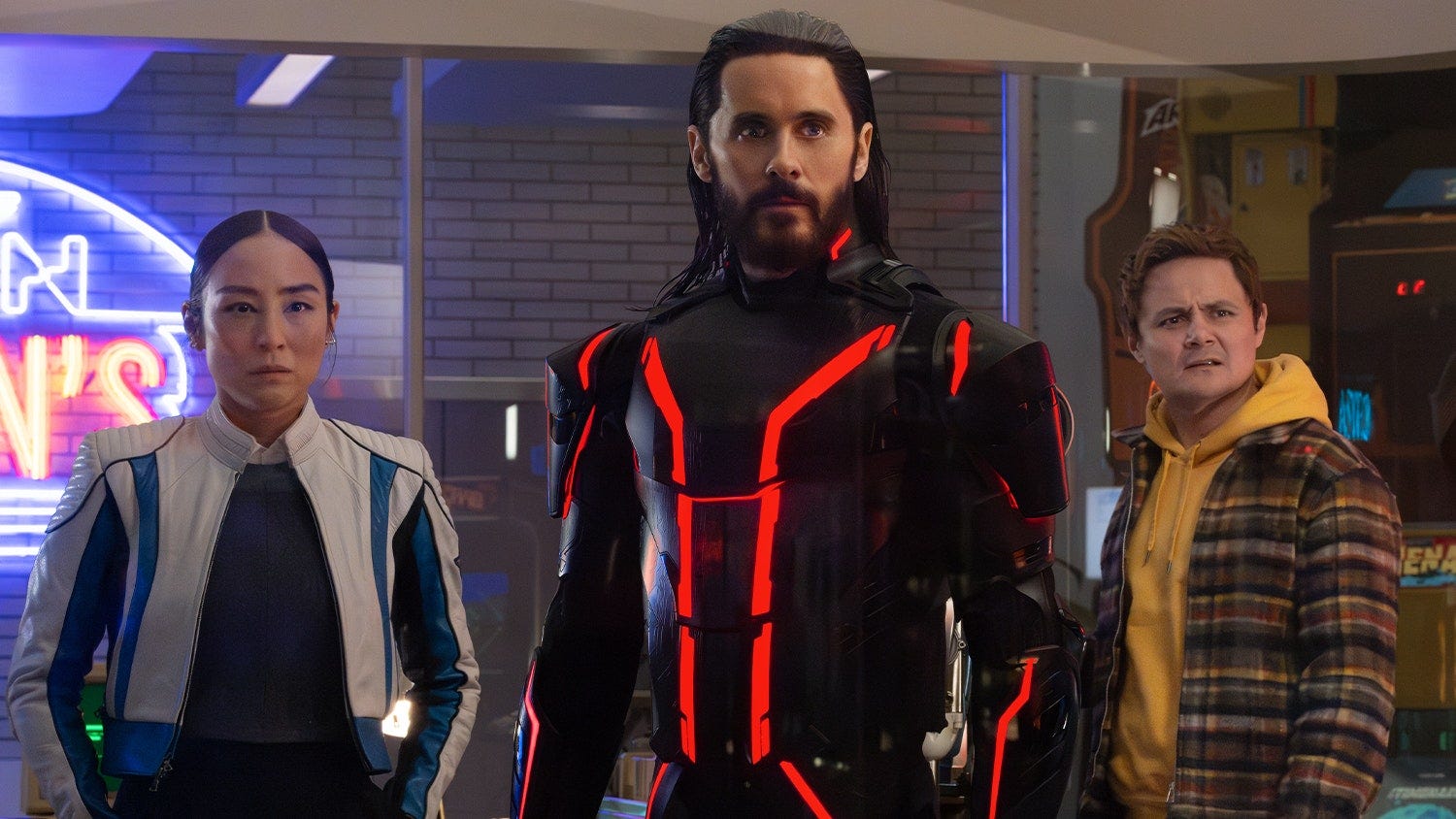
Alas, instead what we’re left with is the Pinocchio-styled journey of Ares (Jared Leto), a humanoid AI program created by the Dillinger Systems corporation – a name long-time fans will instantly recognize as the human villain from the original. The company’s current day CEO is his grandson, Julian Dillinger (Evan Peters), who, through reverse engineering the before-mentioned magic laser previously brought humans into the digital world of The Grid, has found a way to transport programs like Ares, and his partner Athena (Jodie Turner-Smith) into the real world. Julian gives a sales pitch to sell his “perfect soldiers” to some high-ranking military brass on the benefits of AI warfare. “And if he dies, I can build you a new one,” he says with Ares standing two feet away. The catch is that digital people and ojects brought from The Grid can only last twenty-nine minutes in the real world, before dissolving into a puddle of pixels.
Meanwhile, Eve (Greta Lee), the CEO of ENCOM (taking over from previous series' protagonists Kevin and Sam Flynn) and Dillinger’s main competitor, is also searching for a solution to bridge the gap between the real and digital worlds. Except she’s the “Good Tech CEO” who wants to use the technology as a kind of matter replicator like the ones from Star Trek: The Next Generation, to make a world of limitless resources, . Through the discovery of Kevin Flynn’s old lab in the arctic, she uncovers the MacGuffin Permanence Code, the formula, the key to assets from The Grid remaining in the real world permanently, which she demonstrates by digitally constructing an orange tree.
If you’re not familiar with the inner workings of the TRON universe, you might have some questions, such as, why was there an orange tree program? What happens if a human being eats an orange created from computer data? What does it taste like? Can you use it to make orange juice? These are all excellent questions, however, it’s important to understand that TRON is not really science fiction, it’s science fantasy, and it’s best to treat The Grid like parallel dimension, rather than a visualization of the inside of a server. If you’re able to do the necessary mental gymnastics, you’ll find a highly enjoyable, dumb as a motherboard, action-adventure flick.
Once all the place setting is done, and Ares decides he wants to be a real boy, he teams up with Eve to sabotage Dillinger’s plans. From this point, the film essentially becomes one long chase scene. Ares shines brightest (literally) when it’s focused on people trying to “derez” each other in computerized vehicles, and stuff is exploding into pixels. But where the previous films took place mostly on The Grid, this time, the bulk of the action is in the real world. There is an undeniable novelty in seeing the iconic TRON light cycles racing in a real city. There’s some clever uses of the hard light trails they give off, and I really like the way they use them to create impenetrable walls to block off traffic – the film spares us from seeing the inevitable carnage of people driving into light walls – and the twenty-nine minute time limit adds an extra wrinkle of urgency as well.
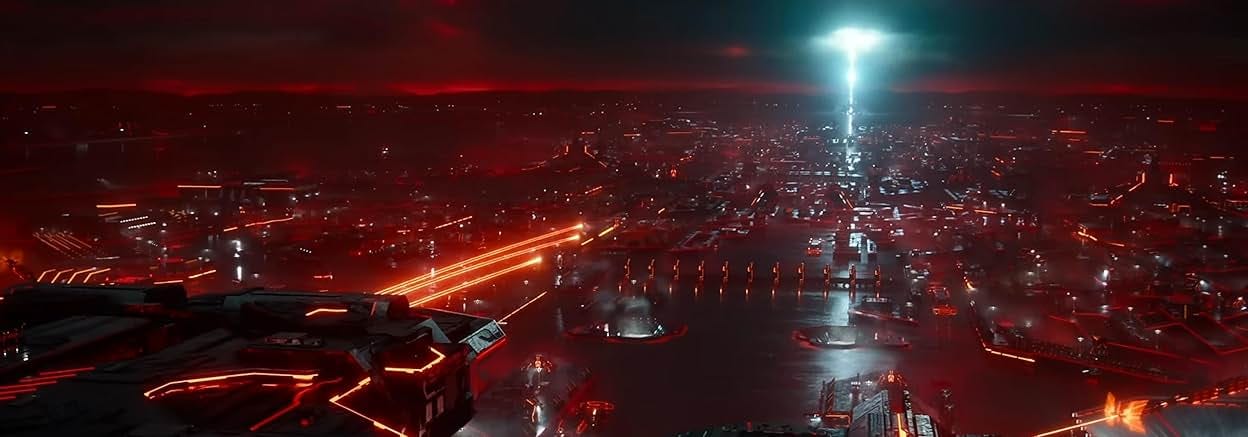
Still, the few times we do travel into The Grid are an unfortunate reminder of what we could be watching, rather than non-descript generic cityscapes. Half the fun of the other TRON movies was the world building. I missed exploring the world of the program’s, their political power structures, and religious devotion to the users.
The other problem is Ares himself. Jared Leto has proven to be a capable performer in the past, but here, he’s woefully miscast as the remorseless assassin who begins to grow a human conscience, à la T2: Judgement Day. Ares has all the charm of a Terms of Service agreement. There are ways to perform the stoic man as a machine role in a way that can also be charming and human, but Leto seems more absent minded than calculating. Every time he begins to have a “human” moment, the performance resembles a high school theatre kid who has forgotten his lines. The movie tries to slap on some charm by making him an 80’s fanatic and peppering the dialogue with quips that come across as warmed over Marvel Studios placeholder dialogue. It just doesn’t work.
Side-note: If you make a Tron movie, but Tron himself is never seen or mentioned, is it still a TRON movie?
Jodie Turner-Smith plays the killer AI Terminator role much better. She feels genuinely threatening in her single minded ruthlessness. Through her performance, there’s even a hint of a love triangle between her, Ares, and Eve, but of course, this being a live action Disney blockbuster, it’s only acknowledged in passing. Any actual exploration of love between programs and humans might raise some uncomfortable questions. Once again, Disney shaves off any potential edge from the source material. I’m not saying either of the other Tron movies were romantic, but there was an undercurrent sex appeal that provided the programs a certain humanity. Ironic that in a movie ostensibly about an AI program trying to become human, the most human thing he does is talk about how much he prefers Depeche Mode to Mozart.
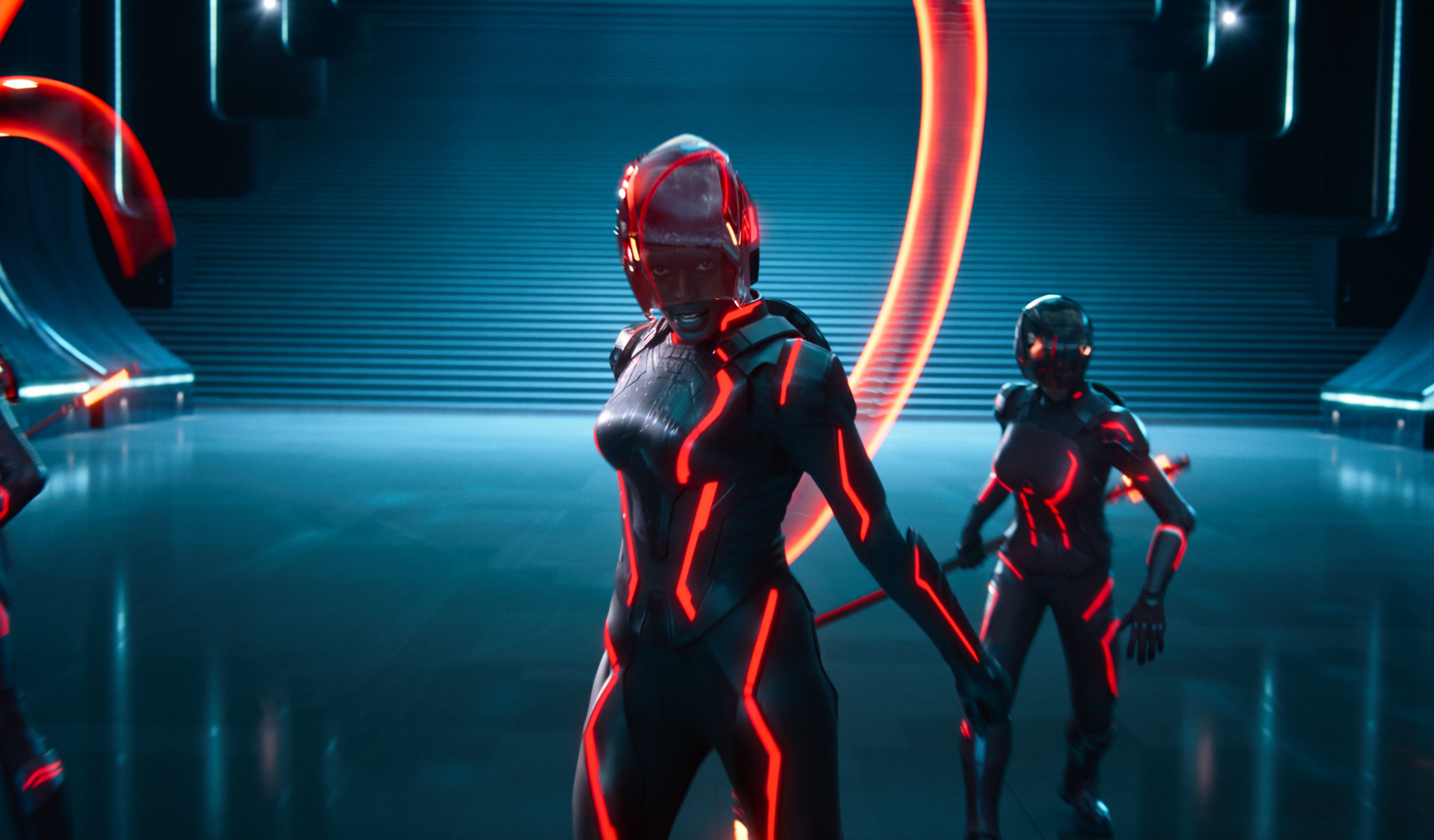
Speaking of music, the soundtrack this time is provided by Nine Inch Nails, and it’s easily the highlight of the movie. Trent Reznor and Atticus Ross’s electro-industrial beats fit the TRON-verse like a glove. I only wish I was looking at cool cyber landscapes instead of office buildings while I was listening to it. But when the visuals match the music, and the vibes feels right, that old TRON magic starts to stir.
I sincerely love the TRON series, because of how un-Disney it is for a Disney production. Now it feels like it’s suffering from the same kind of MCU-ification that has infected Star Wars. In recent decades, the studio has had a knack for taking other studio’s popular franchises and sanding off the edges to fit the Disney brand.
Why is that? I have a theory. Walt Disney was infamously a perfectionist who sought to eliminate the flaws from just about everything he ever made. One of his obsessions during the construction of Disneyland were making sure there were trashcans everywhere, and he would meticulously remove garbage while he walked through the parks. This doomed quest for perfection within the brand is what made Disney what it is today, and what has always held it back. Something Walt himself even acknowledged1.

The magic of movies are often their flaws. The original TRON is dated both in its visuals and storytelling, yet those distinctions are what made it stand out. The melding of cutting-edge technology with classical storytelling is appealing. The strange visuals, bizarre internal logic of The Grid, the almost naïvely optimistic view of our future computer dominated culture, and the threads of violence and sensuality are all what make TRON2 the cult classic that it became. When you round those out, you make it safer for the mainstream, but you lose a little bit more of what made it special each time. Every entry is another sanding, and if you never stop, eventually you’ll be left with nothing at all. End of line.
Sebring, ~ Tim. “Film Review – Strange World.” Midlands Generalist, 3 Jan. 2024, northwestgeneralist.com/2023/01/07/film-review-strange-world/.
A special No-Prize to anyone that counts the number of times I said TRON in this article.
So much I love about this review and reflection, but not enough time right now to say it all. One thing I will share is that, whether intentional or not, Walt Disney's demand for perfection reflects Kevin Flynn's error in the flashbacks of "Tron: Legacy". He gave a simple direction to CLU to create the perfect system, but much like Athena in "Ares" and the Monkey's Paw predicament, his single-minded focus led to him carrying this out to a brutal and tragic degree, teaching the lesson that perfection has a limit.
Overall, you did a great job critiquing the new film while maintaining your genuine love for the franchise.
Also, you ended on the only logical sign-offs, which I will repeat:
End of Line
Hilarious. Well done, Giacomo.